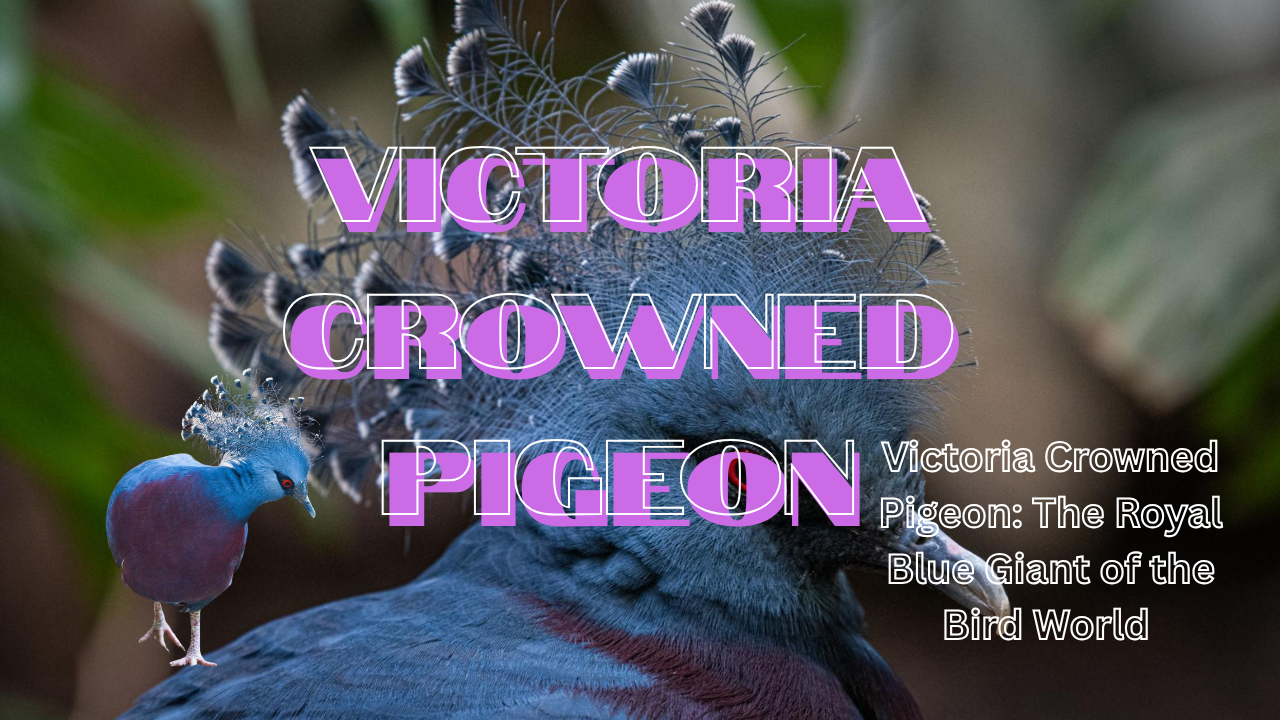
Victoria Crowned Pigeon: The Royal Blue Giant of the Bird World

The Victoria Crowned Pigeon is one of the most magnificent and visually stunning birds on Earth. With its elaborate lace-like crest, vibrant blue-gray plumage, deep red eyes, and graceful movements, this extraordinary bird looks more like a creature from a fantasy kingdom than a member of the pigeon family.
Named after Queen Victoria, the Victoria Crowned Pigeon is the largest pigeon species in the world. It is admired not only for its remarkable appearance but also for its calm temperament and elegant behavior. Native to the rainforests of New Guinea, this bird has become a symbol of tropical beauty and one of the most photographed exotic bird species in the world.
Unlike common city pigeons, the Victoria Crowned Pigeon spends much of its time walking gracefully across the forest floor. Its impressive size and regal appearance often surprise people who encounter it for the first time.
Overview of the Victoria Crowned Pigeon
| Feature | Details |
|---|---|
| Scientific Name | Goura victoria |
| Origin | New Guinea |
| Bird Type | Ground-dwelling pigeon |
| Length | 65–75 cm |
| Weight | 2–3.5 kg |
| Lifespan | 20–30 years |
| Diet | Fruits, seeds, insects |
| Temperament | Gentle, social, calm |
The Victoria Crowned Pigeon is widely regarded as one of the most beautiful members of the pigeon family and is famous for its impressive size and striking appearance.
History and Discovery

| Aspect | Details |
|---|---|
| Discovery Region | New Guinea |
| Naming Origin | Queen Victoria |
| Family | Columbidae (Pigeon Family) |
| Recognition | One of the world’s most beautiful pigeons |
The species was named in honor of Queen Victoria during the nineteenth century. Early explorers and naturalists were amazed by the bird’s elegant crest and unusually large size. As a result, it quickly gained attention among bird enthusiasts and zoologists.
Today, it remains one of the most iconic birds of New Guinea and is considered a flagship species for rainforest conservation.
Physical Appearance
| Feature | Description |
|---|---|
| Crest | Delicate lace-like blue crown |
| Eyes | Bright red |
| Body Color | Blue-gray |
| Chest | Rich maroon-purple |
| Wings | Broad and rounded |
| Tail | Long and elegant |
The most remarkable feature of the Victoria Crowned Pigeon is its spectacular crest. Each feather ends with a delicate white tip, creating an intricate fan-like pattern that resembles royal headwear.
Its deep blue plumage gives the bird a regal appearance, while its red eyes create a dramatic contrast that makes it instantly recognizable.
Size and Body Structure
| Characteristic | Description |
|---|---|
| Height | Up to 75 cm |
| Weight | Up to 3.5 kg |
| Build | Strong and robust |
| Walking Style | Slow and graceful |
The Victoria Crowned Pigeon is significantly larger than common pigeons. Its powerful legs are perfectly adapted for walking across forest floors, and its sturdy body allows it to move confidently through dense vegetation.
Because of its impressive size, many people initially mistake it for a small peacock or another exotic ground bird.
Natural Habitat

| Habitat Feature | Description |
|---|---|
| Region | Northern New Guinea |
| Ecosystem | Tropical rainforest |
| Environment | Humid lowland forests |
| Lifestyle | Ground-dwelling |
The Victoria Crowned Pigeon thrives in dense tropical rainforests where food is abundant and predators are relatively limited.
These forests provide shelter, nesting sites, and a constant supply of fruits and seeds. The bird prefers to remain on the forest floor but may occasionally perch in trees when necessary.
Diet and Feeding Habits

| Food Type | Examples |
|---|---|
| Fruits | Figs, berries |
| Seeds | Forest seeds |
| Insects | Beetles and larvae |
| Plant Matter | Shoots and leaves |
The Victoria Crowned Pigeon spends much of its day searching for food on the ground. Its diet consists mainly of fallen fruits, which play an important role in maintaining rainforest ecosystems.
As the bird consumes fruit and disperses seeds, it helps support plant growth throughout the forest.
Personality and Temperament
| Trait | Description |
|---|---|
| Aggression | Very low |
| Sociability | High |
| Curiosity | Moderate |
| Intelligence | Moderate |
| Calmness | Very high |
One of the reasons people admire this species is its gentle nature. Unlike some birds that can be noisy or aggressive, the Victoria Crowned Pigeon is generally calm and peaceful.
It often moves slowly and confidently, displaying an almost royal level of composure.
Behavioral Characteristics
| Behavior | Purpose |
|---|---|
| Ground walking | Food searching |
| Crest displays | Communication |
| Social grouping | Safety and bonding |
| Booming calls | Territory and mating |
The bird’s movements are graceful and deliberate. Watching a Victoria Crowned Pigeon walk through the rainforest can feel almost like observing a fashion model on a runway.
Its crest may be raised slightly during social interactions or displays.
Vocalizations
| Sound Type | Purpose |
|---|---|
| Deep booming calls | Communication |
| Soft coos | Social interaction |
| Courtship sounds | Breeding displays |
Unlike the familiar cooing of city pigeons, the Victoria Crowned Pigeon produces deep resonant sounds that can travel considerable distances through the forest.
These calls help individuals communicate with potential mates and other members of their group.
Reproduction and Family Life

| Aspect | Details |
|---|---|
| Clutch Size | Usually 1 egg |
| Parenting | Shared responsibilities |
| Incubation Period | About 30 days |
| Chick Development | Slow and carefully protected |
The Victoria Crowned Pigeon is known for strong parental care. Both parents participate in incubating eggs and protecting their young.
This cooperative approach increases the survival chances of chicks in the wild.
Lifespan
| Environment | Lifespan |
|---|---|
| Wild | 15–20 years |
| Captivity | 20–30 years |
With proper care and protection, these birds can enjoy remarkably long lives. Many individuals in zoological collections live well beyond twenty years.
Conservation Status
| Category | Status |
|---|---|
| Population Trend | Decreasing |
| Major Threats | Habitat loss, hunting |
| Conservation Efforts | Protected reserves |
The biggest threat facing the Victoria Crowned Pigeon is the destruction of tropical rainforests. Habitat loss reduces food availability and nesting opportunities.
Conservation organizations continue working to protect both the species and its rainforest habitat.
Fascinating Facts
| Fact | Description |
|---|---|
| Largest pigeon | Biggest pigeon species on Earth |
| Royal appearance | Crown resembles royal headwear |
| Rainforest resident | Native to New Guinea |
| Gentle giant | Calm despite large size |
| Seed disperser | Supports forest regeneration |
Many bird enthusiasts consider the Victoria Crowned Pigeon one of the most beautiful birds in the world due to its unique combination of size, color, and elegance.
Pros and Cons as an Aviary Bird
| Pros | Cons |
|---|---|
| Extraordinary beauty | Requires large enclosure |
| Calm personality | Specialized care |
| Long lifespan | Rare and expensive |
| Quiet nature | Limited availability |
Because of its size and environmental requirements, this species is usually found in professional aviaries, zoological parks, and conservation centers rather than typical households.
Final Thoughts

The Victoria Crowned Pigeon is truly one of nature’s masterpieces. Its intricate crown, rich blue plumage, gentle personality, and impressive size make it unlike any other pigeon species on Earth.
Whether seen in a rainforest, conservation center, or wildlife documentary, this magnificent bird leaves a lasting impression on everyone who encounters it. Its beauty, elegance, and rarity have earned it a place among the most extraordinary birds in the world.